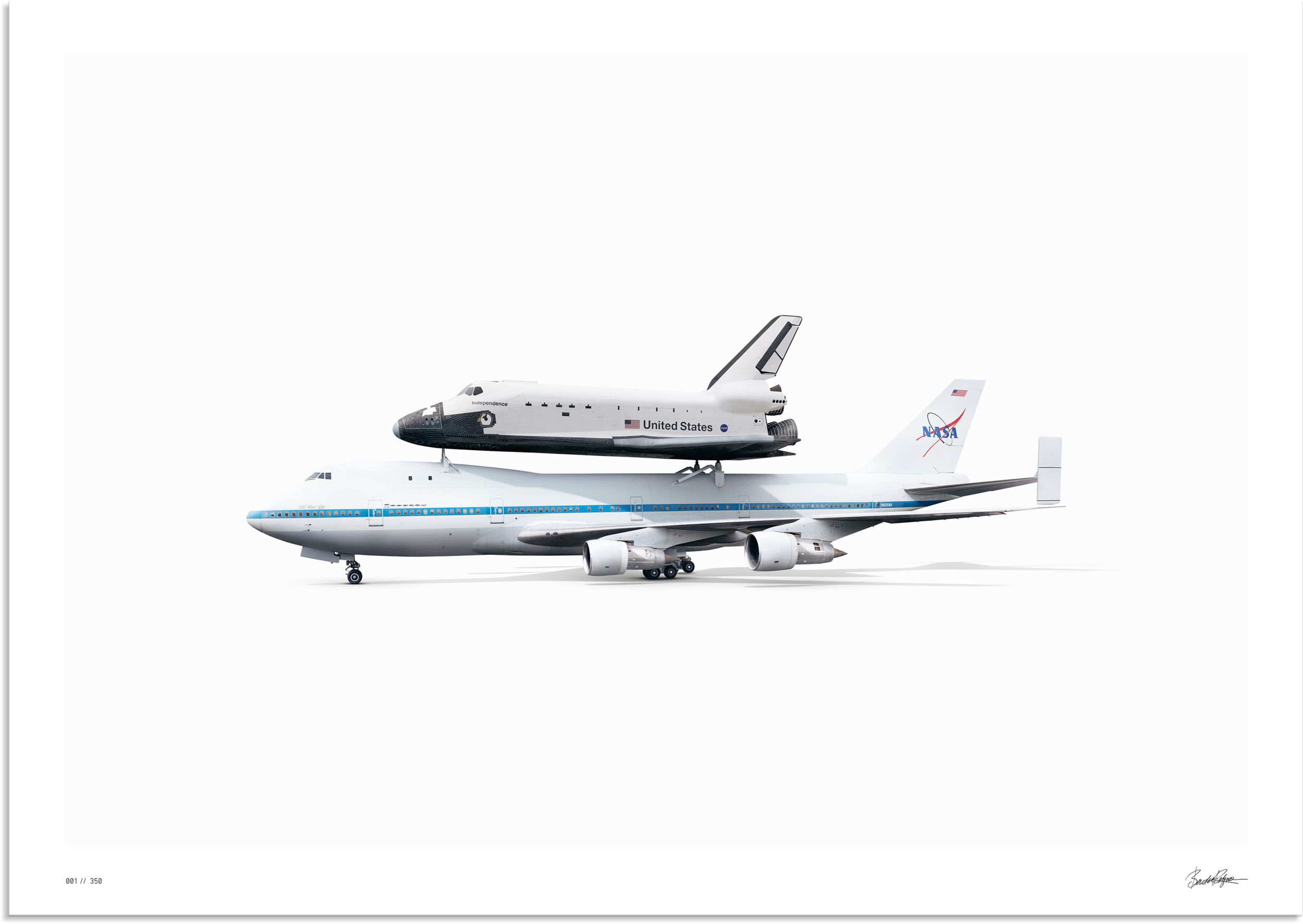
Nasa Shuttle Carrier Aircraft - The Shuttle Carrier Aircraft (SCA) are two heavily modified Boeing 747 aircraft used by NASA to transport the Space Shuttle. One of them is an American Airlines 747-100 model (N905NA), while the other is a short-haul 747-100SR belonging to Japan Airlines (N911NA).
SCAs are used to transport the space shuttle from the landing site to the launch complex at the Kennedy Space Center, or more specifically the NASA Shuttle Landing Facility. The orbiters are placed on top of the SCAs with large gantry structures that lift the orbiters off the ground for post-flight servicing, and then attach to the SCAs for flight.
Nasa Shuttle Carrier Aircraft
In the initial test flight, the aircraft was released from the SCA during flight and the shuttle glided to the ground under its own power.
Nasa's Shuttle Carrier Aircraft 911's Final Flight
Space Shuttle Columbia on SCA N905NA flying near the Vehicle Assembly Building at Kennedy Space Center in 1986. Note that N905NA no longer has American Airlines markings
The first plane, a Boeing 747-100 was registered as N905NA It was purchased by American Airlines in 1974 and was initially used as part of NASA's studies and tests involving the F-104 to simulate a "release" of the 747.
The 747 was heavily modified by Boeing in 1976. Its cockpit was stripped, spar assemblies were added, and the fuselage was reinforced; A vertical stabilizer was added to the tail to help stabilize the orbit when it was launched. The avionics and engines were also improved, including a cap tunnel system similar to that used on the first test flight of the Boeing 747. The cockpit canopy system was removed due to potential engine problems Eating behind the cap of a crew member
NASA considered the C-5 as a Galaxy carrier, but later abandoned in favor of the 747 - due to the 747's low-wing design compared to the C-5 design and was also considered. The US Air Force will retain ownership of the aircraft, in the case of the 747, NASA will own it.
The Space Shuttle Orbiter Challenger Atop Nasa's Boeing 747 Shuttle Carrier Aircraft Sca, Nasa 905, Foto De Stock, Imagen Derechos Protegidos Pic. Gxc S04671
By the early 1980s, SCA N905NA no longer carried the distinctive American Airlines markings, and NASA replaced them with their own livery.
In 1988, NASA purchased a surplus 747SR N911NA [2] from Japan Airlines after the Challenger crash. Registered as N911NA, it entered service in 1990 after modification as N905NA. It was first used in 1991 to transport the new shuttle Endeavor from Palmdale, California to the Kennedy Space Center.
The two aircraft are functionally similar, although the N911NA has ten windows on the upper deck, five on each side, while the N905NA has only two. The rear mounting point of the N905NA has a tongue in cheek instruction that reads "Attach Orbiter Here" - making the "dark side down" even clearer.

A shuttle transporter takes off at the Dryden Flight Research Center at Edwards Air Force Base, California. Another shuttle carrier based at Pinal Airpark in Arizona One (N905NA) is a 747-100 model, while the other (N911NA) is a short-range 747-100SR.
Nasa Shuttle Carrier Jumbo Jet Ready To Roll On Houston Road Trip
The space shuttles were used to return the shuttle landing facility to the Kennedy Space Center from the landing site. The orbiters were placed on top of the SCAs by the Mette-Demet apparatus, large gantry-like structures that lifted the orbiters off the ground for subsequent flights that matched the SCAs for the shuttle flights.
In a test and landing test conducted in 1977, the test shuttle was released from an SCA in flight and glided to a landing under its own power.
NASA considered the Lockheed C-5 Galaxy for the shuttle carrier role, but rejected it in favor of the 747. This was due to the low wing design of the 747 compared to the high wing design of the C-5, and the U.S. The Air Force would retain ownership of the C-5, while NASA could own the 747
The first aircraft, a Boeing 747–123 registered N905NA, was originally built for American Airlines. With air traffic declining and 747s not being filled, American Airlines sold it to NASA. After the test, it set the American line of sight while causing panic in the 1970s. It was acquired in 1974 and used to investigate wake vortices as part of a broader study of NASA drones, and experiments shuttle where the F-104 flew in close formation and simulated a release from a 747.
Nasa Shuttle Carrier Aircraft 911's Final Flight
And the fuselage became rigid They added mounting legs on top of the 747, positioned to match the equipment on the craft that attached it to the external fuel tanks for launch.
As you climb on the shuttle, the gravity changes A vertical stabilizer was added to the tail to improve the stability when the orbiter was carried. The avionics and genes were also modernized
In the event of catastrophic mid-flight failure If the bailout is refused, explosives will detonate in the fuselage below the glide, allowing the crew to glide and parachute out to the ground. After the approach and landing tests, the slide system was removed because crew members were concerned about the possibility of jettisoning.
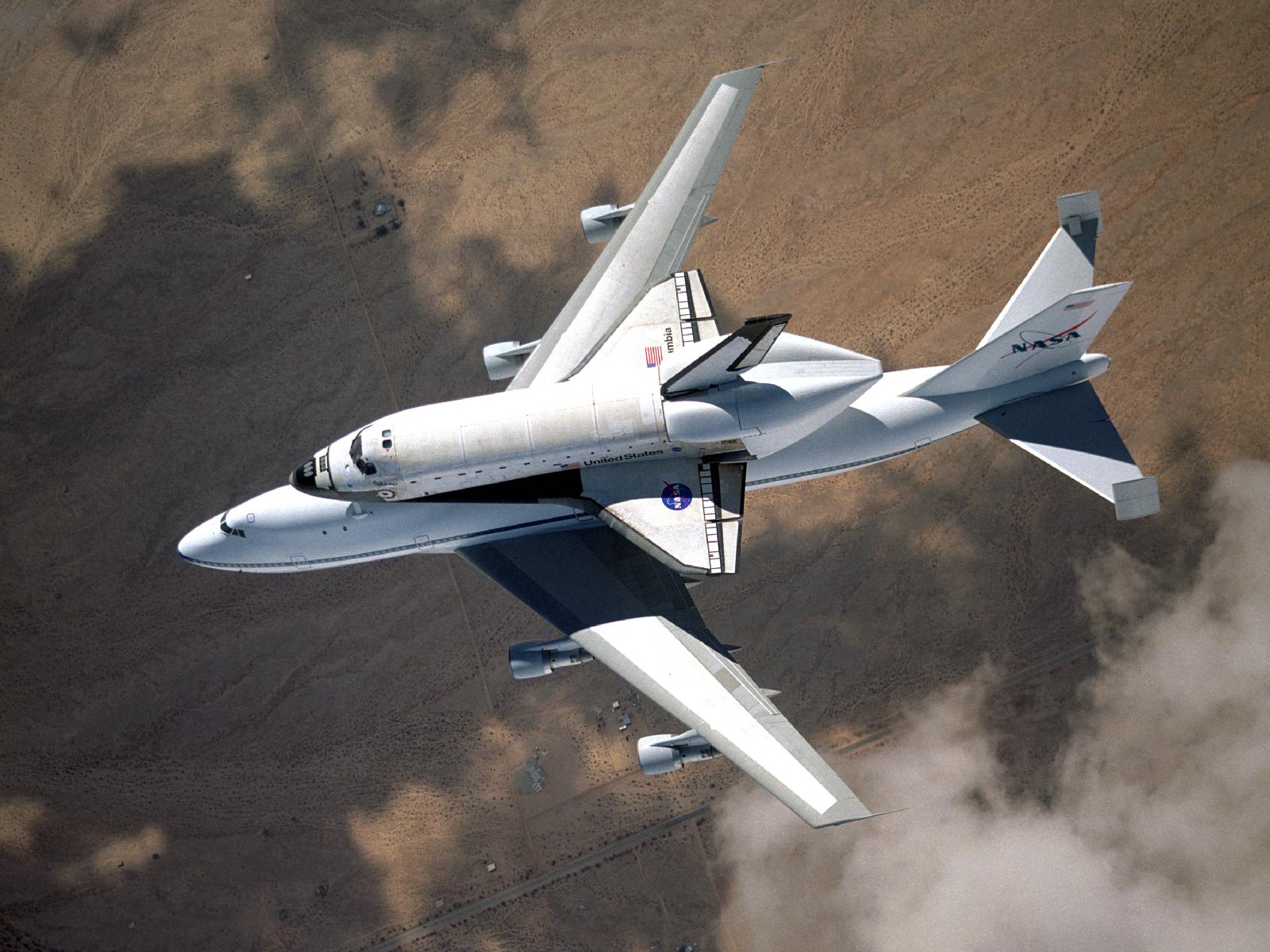
Flying with the additional drag and weight of the orbiter imposed significant penalties for fuel and altitude. This limit was reduced to 1,000 nautical miles (1,200 mi; 1,900 km), compared to the unladen range of 5,500 nautical miles (6,300 mi; 10,200 km) a SCA requires refueling on a transcontinental flight.
Nasa Shuttle Carrier Aircraft, Dryden History Gallery
The SCA had an altitude of 15,000 feet (4,600 m) and a maximum cruising speed of Mach 0.6 in orbit.
A study was conducted to equip the SCA with aerial filling equipment, which had already been developed in the United States. Air Force E-4 (modified 747-200s) and 747 tankers for the IIAF. However, during a flight with a tanker aircraft to test the filling method, small cracks were found on the tailfin of N905NA. While these were easily achieved in test flights, they felt that there was no sse to take unnecessary risks. Since there was no urgent need to provide full air capacity, the test was shelved.
In 1983, SCA N905NA did not carry the triangular stripes of several American airlines. NASA replaced it with a white fuselage with a blue cheatline and its own books.
It was also used for surprise flights on a tour of Europe with a refueling stop in Goose Bay, Canada; Keflavik, Iceland; gland; and West Germany He is at the Paris Air Show
Nasa Shuttle Carrier Aviones Que Transportaban La Lanzadera Espacial Endeavour Vuela Sobre El Coliseo De Los Ángeles En Los Ángeles, California, 21 De Septiembre De 2012, En La última Etapa De Su
In 1988, NASA purchased the 747SR-46 from Japan Airlines after the Challenger crash. Registered N911NA, it entered service with NASA in 1990 after conversion as N905NA. It was first used in 1991 to launch the new Devor shuttle from its manufacturers in Palmdale, California, to the Kennedy space shuttle.
The two aircraft were unknown in operation, although the N911NA had five upper deck windows on each side while the N905NA only had two. The rear mounting points on both planes were marked with the humorous instructions "Attach Orbit Here" or "Position Orbit Here", explained in the "Black Side Down" cautionary note.
Shuttle carriers in the United Kingdom, Spain and France could operate from other shuttle landing sites. Since the shuttle carrier's range is reduced when reentering orbit, additional preparations such as removing payloads from orbit may be necessary to reduce its weight.

The ferry and free flight numbers of the various orbiters and Phantom Ray are listed in silhouette on the port side of the SCA.
Foamboard Nasa Shuttle Carrier Aircraft
On December 11, 2010, Boeing transported a demonstration UCAV (Unmanned Aerial Vehicle) Phantom Ray to Edwards, on a shuttle carrier from St. Louis, Missouri.
The Approach and Landing Tests were taxi and flight tests of the Space Shuttle Terrestrial prototype conducted at Edwards Air Force Base in 1977. Shuttle systems must be operational. There were 3 taxi tests, 8 captive flight tests and 5 free flight tests.
The shuttle flight normally transports the shuttle into orbit from Edwards Air Force Base, the secondary landing site where the orbit key was processed. It was normal in the early days
Special operations aircraft, aircraft operations manual, aircraft operations degree, aircraft carrier flight operations, aircraft maintenance operations, nasa security operations center, aircraft operations jobs, aircraft nasa, aircraft operations officer, aircraft ground operations, aircraft operations, us aircraft carrier operations
0 Comments